★★★★★
Our 1960s pipe lives on
Our clay line was cracking at the joints. They lined the worst run and repaired one bad section. No digging through our mature garden. The line works great now.
Many Covina homes still have cast iron or clay sewer pipes. We repair the cracks, separations, and corrosion these older materials develop, so your line works reliably again.
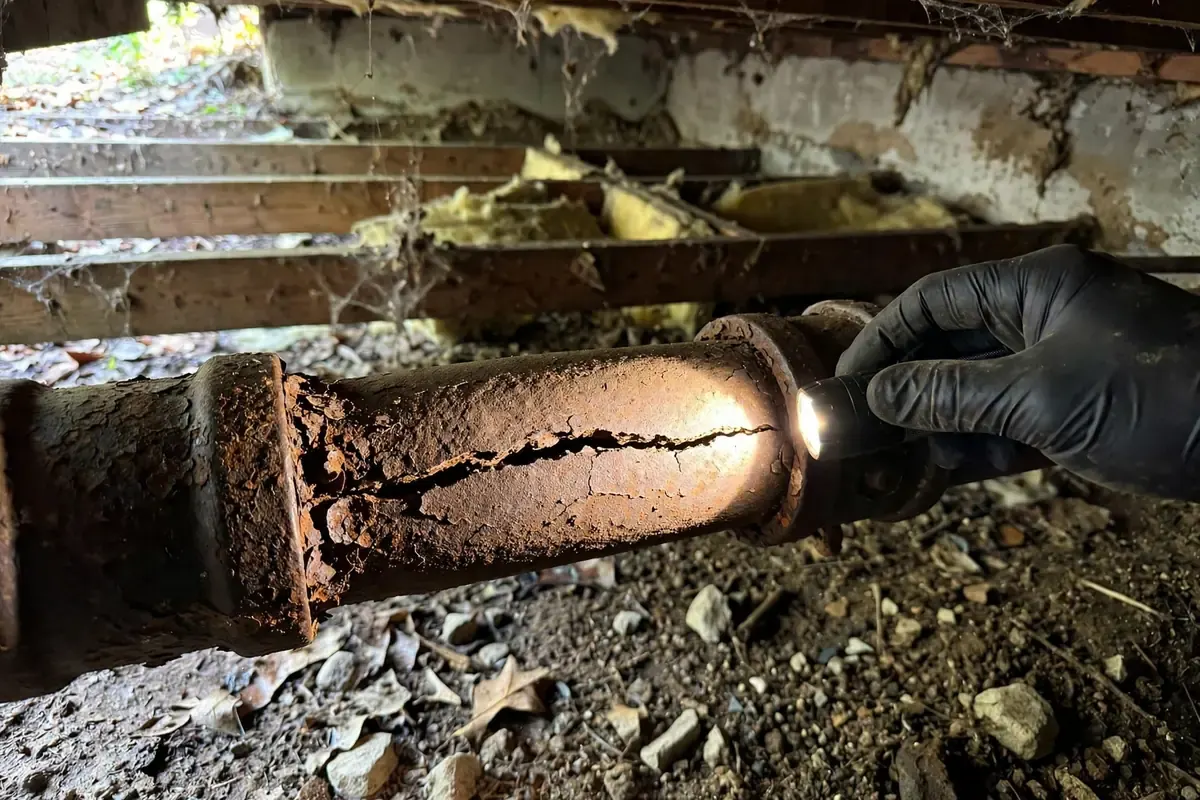
Camera inspection shows the real problem before work starts.
Trenchless options fix pipes without tearing up yards.
Shoe covers, drop cloths, and a clean job site.
Based in Covina, serving the San Gabriel Valley.
Real feedback from cast iron and clay pipe repairs around Covina.
Homes built before the 1980s in Covina often have clay, concrete, or cast iron sewer lines. These materials served well for decades, but time takes a toll. Clay pipes have joints every few feet that shift and separate. Cast iron corrodes from the inside out, growing rough scale that catches waste.
Common failures include cracks from ground movement, joints pulled apart by shifting soil, root intrusion through every joint, and internal corrosion that narrows cast iron to a fraction of its size. A camera inspection shows exactly which of these your line suffers from.
Repair options depend on the damage. A single bad section can get a point repair. Widespread cracking is a good candidate for trenchless lining, which creates a smooth new pipe inside the old one. Severely collapsed lines may need replacement. We explain what the camera shows and match the fix to the condition.
Clay and cast iron fail differently than modern PVC.
Clay pipes have a joint every few feet. Each one can shift, separate, and invite roots.
Cast iron rusts from inside, building scale that snags waste and shrinks flow.
We match the repair to the pipe: patch the joint, line the run, or replace the line.
Clay and cast iron give warnings before they fail completely.
Roots exploit every joint in clay pipe. Repeated root clogs signal joint failure.
Corrosion scale inside cast iron narrows the pipe gradually until drains slow.
Separated joints leak gases and moisture into the surrounding soil.
Soil washing into a broken old pipe can open voids above it.
Rough, scaled interiors trap air and waste, causing gurgling when water flows.
Age alone is a risk factor. Original clay or cast iron lines deserve an inspection.
Diagnosis first, then the right fix.
We map cracks, joints, corrosion, and breaks along the whole line.
Point repair, lining, or replacement, matched to the damage.
The chosen fix is installed with minimal disruption.
A final camera check and flow test confirm the repair.
Answers about cast iron and clay pipe repair in Covina.
Clay can last 50 to 60 years, cast iron often 50 to 80, but soil conditions, roots, and use matter more than age alone. Many Covina lines are now at or past that age, which is why inspections are wise.
Often yes. Isolated cracks and bad sections can be repaired or lined. When corrosion is severe along the whole run, replacement is usually the better investment.
Yes, it is one of the best uses for lining. The liner seals every joint at once, which shuts out roots and stops leaks without digging up the old pipe.
Yes. Special transition couplings join modern PVC to clay, cast iron, or concrete pipe securely. Mixed-material repairs are routine.
A camera inspection is the way to decide. If the footage shows widespread cracking or heavy corrosion, proactive replacement beats an emergency backup. If the pipe looks sound, monitoring is enough.
Do not wait for it to get worse. Call now and tell us what you are seeing. We will take it from there.